Bug Details
Large Roaches
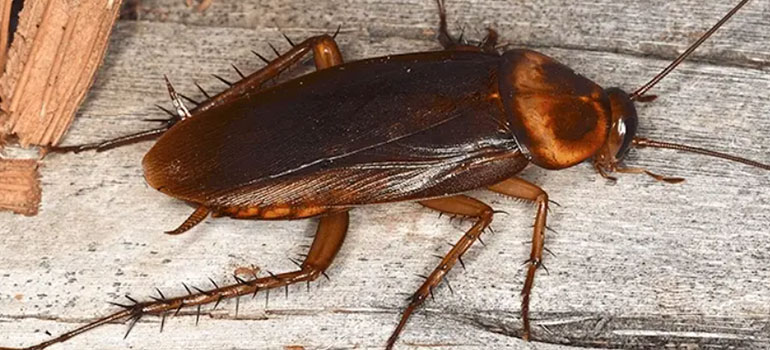
Large cockroaches aren’t just creepy: they can also contaminate your food and spread harmful bacteria. While these roaches can be difficult to control, you can take proactive steps to help banish large cockroaches in the house.
- Large cockroaches encompass a variety of species that are commonly known as American roaches, palmetto bugs, and Australian, brown, and smoky brown roaches.
- Adult roaches are up to 1 inch long and generally rest in the daytime.
- After dark, they come out of hiding to mate and forage for food.
- Large roaches can fly but are most often seen running quickly in and out of homes, storage areas, and garages.
Additional details
Where they hide?
- In warmer climates, large cockroaches tend to live outdoors.
- They are often found around the foundation of the home, near patios and porches, or under mulches, shrubs, and other plant material.
- Once inside, large roaches can be found hiding in dark, humid areas like laundry rooms, utility rooms, basements, garages, and crawl spaces, as well as anywhere they can find food.
- In cooler climates, large cockroaches can be found outdoors only in semi-warm areas like sewer systems and steam tunnels.
- Indoors, these pests can be found in storage areas, building basements, garbage collection areas, and in the kitchen searching for food.
What they want from you?
- Large cockroaches come inside looking for food, water, and shelter, especially during very cold or hot weather.
- Large roaches are especially attracted to foods with sugar, starch, or grease. However, they will eat almost anything, including pet food.
Why they’re a problem?
- Some large cockroaches can pick up, carry and spread harmful bacteria, such as Salmonella, to other surfaces that they walk across.
- Many people are scared or repulsed by roaches due to their unsightly appearance and smell.
Small Roaches
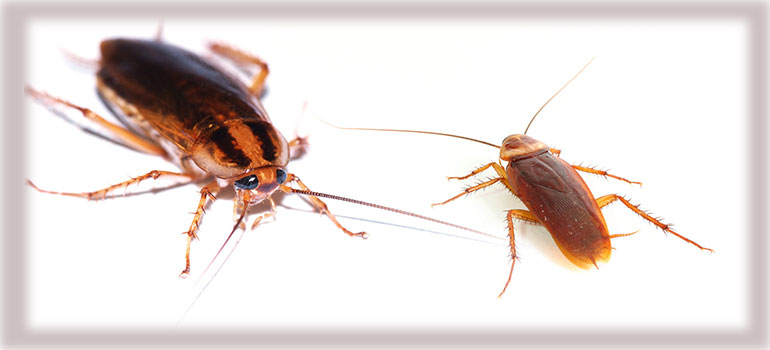
In addition to being unpleasant and unwanted guests in the home, small roaches can spread harmful bacteria and cause allergies and asthma in children. Effective roach control starts with making your home unappetizing for these pesky creatures by removing all available food sources.
- Small cockroaches include different species that are commonly known as German cockroaches, Asian cockroaches, brown-banded cockroaches and the Pennsylvania wood cockroaches.
- Small cockroaches are 1/4” to 1/2” long long and generally hide in the daytime.
- After dark, cockroaches come out to mate and forage for food.
- Roaches are notoriously difficult to control because they reproduce so quickly. In fact, one German roach can lay 40 eggs at a time.
Additional details
Where they hide?
- Small roaches often live indoors, usually invading the kitchen, pantry, and bathroom.
- They like to hide in cracks, crevices, or other protected areas that are suitably warm and humid during the daytime hours.
What they want from you?
- Small roaches primarily search for food, water, and warmth.
- Small roaches will feed on almost anything, but are especially attracted to foods that have sugar, starch, or grease.
Why they’re a problem?
- Some small cockroaches can pick up, carry and spread harmful bacteria, such as Salmonella, to other surfaces that they walk across.
- They deposit their feces in cupboards, sinks, and on countertops.
- Small roaches are a source of allergies and asthma in children. To help decrease this impact