Bug Details
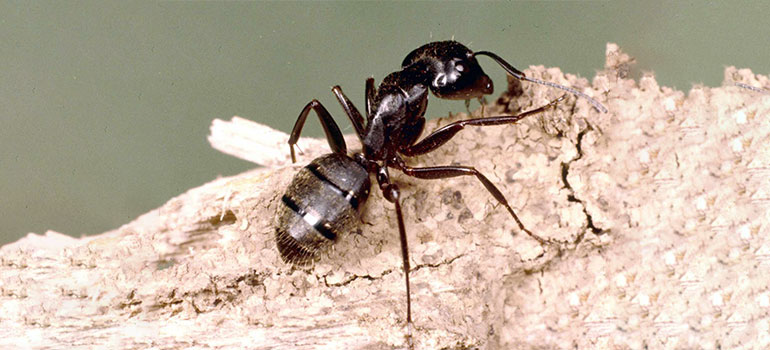
Carpenter Ants
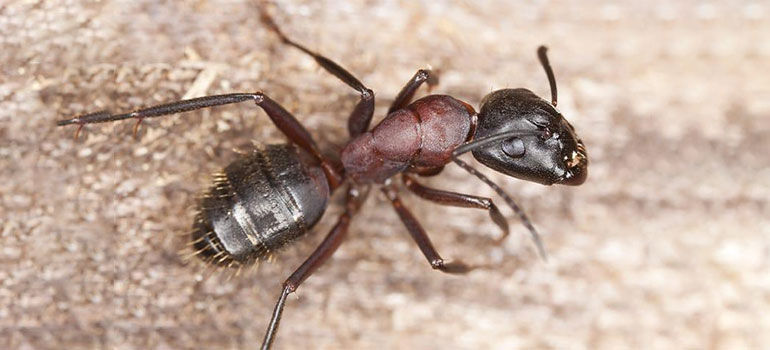
Carpenter ants gnaw into wood to make or expand their nesting space. If left untreated, large colonies of carpenter ants in the home can be as destructive as termites. Learn more about carpenter ants and find ways to help make sure these destructive critters don’t make themselves at home in your home.
Unlike termites, carpenter ants do not eat wood. They simply remove the wood to build a nest and leave small piles of sawdust outside the entrance to the colony.
Additional details
Why they nest?
- Black carpenter ants commonly build indoor colonies in wall voids, attics, and water-damaged or rotting structural wood.
- Outdoor colonies are often found in sheds, firewood, deck woods, tree trunks, gutters, and soffits.
- If you see big, black ants going in and out of a hole with small bits of sawdust around the opening, this is a sign that a carpenter ant colony is nearby.
What they want from you?
- If you see carpenter ants in the house, they are likely looking for food. Common food sources in a home include sweets such as syrup, honey, sugar and jelly, as well as meats and pet foods.
- They’re also looking for moisture found in and around the sink, shower, leaky pipes, and spills; these are ideal locations for building new, indoor colonies.
- The presence of carpenter ants in the house can be a sign of water or moisture problems in your roof, gutters, porch, deck, floors, or walls.
Why they're a problem?
- Large colonies that are left untreated can be as destructive to your home as termites.
- Black carpenter ants have large and powerful jaws and will bite if disturbed.
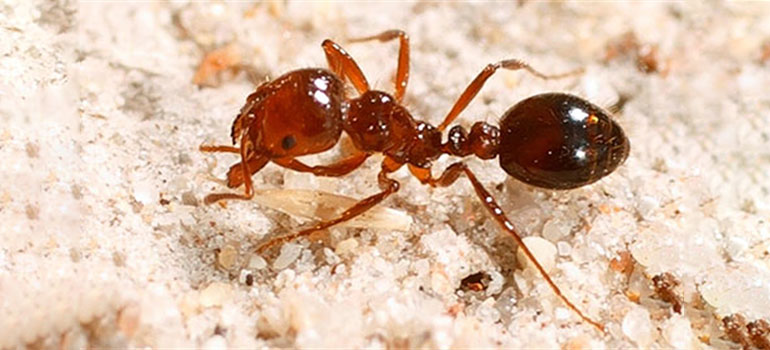
Fire Ants
Fire ants will sting anything that disturbs their colony. Their stings can be quite painful and may require medical attention, especially if you’re allergic. Help protect your family from these aggressive critters by learning more about them and finding out how to help get rid of fire ants in the house.
- Fire ants are usually 1/8 to 1/4-inch long and reddish-brown or black in color.
- They are sometimes called red ants or red imported fire ants (RIFA).
Additional details
Where they nest?
- Fire ants generally build colonies outdoors in dome-shaped mounds that are often 1 to 2 inches in diameter.
- They will often kill the grass around their mounds.
- Not all outdoor mounds are visible. Some are built under rocks or wood laying on the ground.
- When the soil is moist and cool, outdoor fire ant colonies are located within a couple of feet of the soil surface. During dry periods, colonies may extend 5 or even 10 feet below the soil surface.
- After a heavy rain, many people observe new colonies. These could be new, but often they are just hidden colonies that are being re-opened after wet soil clogs the fire ant tunnels.
What they want from you?
- Fire ants in the house are looking for food and moisture, which can be found in sinks, showers, leaky pipes, spills, etc.
- Fire ants especially likely to look for water in your home when it is hot and dry outside.
Why they’re a problem?
- Fire ants can bite you and your pets. They also have a stinger on their abdomen that they use to inject venom into anything that disturbs their colony.
- Their stings can be quite painful and multiple stings may require medical attention.
- Occasionally, their stings can cause a severe and possibly fatal allergic reaction in some people.
- Fire ants are a persistent problem in warmer climates because the ants routinely move their colonies into new locations in search of ample food and moisture.
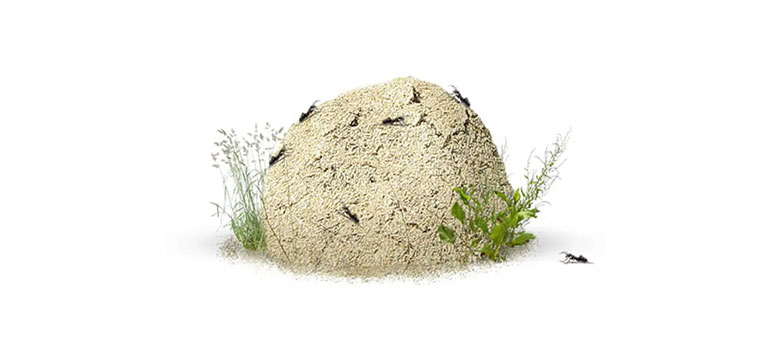
Outdoor Mound-Building Ants
Mound-building ants excavate the soil to build colonies, which can leave unsightly ant hills (also called ant mounds) on your landscape and kill the surrounding grass. Find out how to help get rid of ants in the yard and keep them from coming indoors in search of a snack.
- The average life expectancy of an ant is only a few weeks, but the ant colony can live for years.
- Most species do not sting or directly harm humans or pets.
Additional details
Where outdoor ants nest?
- Worker ants excavate the soil to build their colonies under dirt mounds.
- These ant mounds are located in lawns, mulch areas, and along sidewalks, patios, decks, and the foundation of your home.
What they want from you?
- Food, food spills, and moisture that can be found in sinks, showers, leaky pipes, spills, etc.
Why there're a problem?
- Ant hills in the yard can be unsightly and they often kill the surrounding grass.
- Mound-building ants that you see outside may eventually come inside in search of food and water.
Nuisance Ants
Nuisance ants come inside looking for a tasty treat to bring back to their friends in the colony. Not only can these tiny ants in the house be embarrassing, they can also contaminate your family’s food. Learn more about ants in the home and find ways to help get rid of these uninvited guests.
- There are many species of nuisance ants that invade our homes. They come in all different sizes and colors.
- Some species names are pharaoh, Argentine, pavement, and odorous house ant.
- When one ant finds food or water, they will lay down a chemical trail that guides other worker ants to the source. You will see trails of ants going back and forth from the food or water.
Additional details
Where they Nest?
- Nuisance ants in the home may build their colonies in wall voids or under flooring.
- Outdoor ant colonies are often built close to the home and are hidden in the soil or under objects on the ground.
What they want from you?
- If you see tiny ants in the house, especially the kitchen, they are likely searching for food to bring back to the colony.
- Nuisance ants are known to eat many different types of food and they can even change their food preferences during the year.
Why they're a problem?
- Tiny ants in the kitchen can infest and contaminate your food, which can be a hassle and expensive to replace.